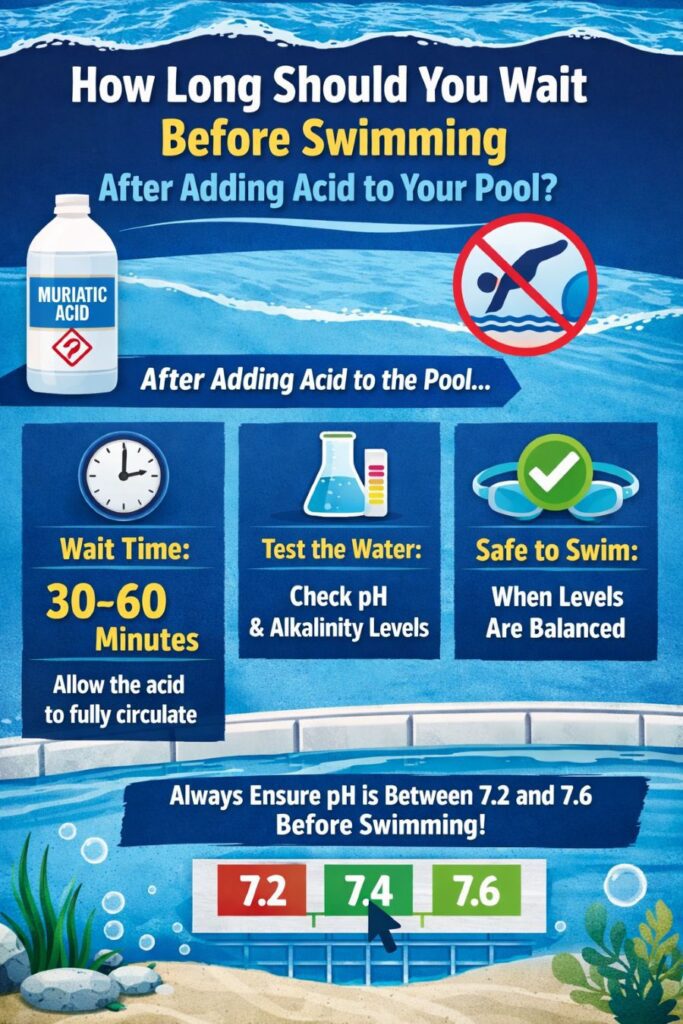
In most cases you should wait at least 30 minutes to 1 hour to swim after adding acid to a pool, as long as the pump is running and the pH has settled back into the safe range of 7.2 to 7.8. Smaller pools with strong circulation can be ready closer to 30 minutes, while larger pools or heavier acid doses may need the full hour or a little longer. The safest approach is always to test the water and confirm balanced pH before anyone gets in.
Maintaining the perfect balance of chemicals in your pool is crucial for a safe and enjoyable swim, especially when adding acid to control pH levels. If you’re wondering how long after putting acid in a pool can you swim, the general rule of thumb is to wait at least 30 minutes to an hour after adding acid, depending on the pool size and the circulation system. This waiting period ensures that the acid has properly dispersed and diluted, making the water safe for swimmers. Read on to learn more about why this waiting time is essential and how to ensure your pool is always swim-ready.
Must Read: How Does an Infinity Pool Work?
Types of Acid & How Long After Putting Acid in the Pool Can You Swim?
| Types of Acid | Another Name | Usage | Benefits | Precautions | After Timing |
| Muriatic Acid | Hydrochloric Acid | cleans surfaces, removes stains,adjusts alkalinity | pH levelsReadily available cost-effective | Wear protective gear, ventilate the area, avoid contact with skin and eyes. | at least 30 minutes to 1 hour before swimming. |
| Sodium Bisulfate | Dry Acid | lower pH levels in swimming pools | Safely lowers pHGranular form availableLess corrosive compared to muriatic acid | Handle with care, dissolve before adding, avoid contact with skin. | wait about 30 minutes to 1 hour before swimming |
| Sulfuric Acid | Oil of Vitriol |
battery production, fertilizer manufacturing, and refineries | Essential for industrial processes like battery manufacturing and chemical synthesis. | Handle with extreme caution, wear protective gear, avoid skin contact. | safe range (7.2-7.8) before allowing anyone to swim |
| Acetic Acid | Vinegar |
food flavoring and preserving processes | preserving foodacting as a natural cleaner | Handle with care, avoid contact with eyes, and store safely. | this process can take about 30 minutes to 1 hour, depending on the volume of water and concentration of the acid added |
| Citric Acid | sour salt |
food flavoring, cleaning agents, and pharmaceuticals | Enhances flavorpreserves foodchelates metals, eco-friendly | Handle with care, wear gloves, avoid inhalation, store in dry place. | usually takes about 30 minutes to 1 hour |
| Phosphoric Acid | orthophosphoric acid |
beverages, metal cleaning, and rust removal | removes rustaids in dental care | Handle with extreme caution, wear protective gear, avoid skin contact. | safe range (7.2-7.8) for swimming |
Swim-Ready Wait Times at a Glance
Acid is not the only product that changes when you can get back in the water. Use this quick reference to see how long to wait to swim after adding acid to your pool compared with other common chemicals. When in doubt, test the water first and let the numbers, not the clock, decide.
|
Pool Chemical |
Typical Wait Before Swimming |
Swim-Safe Target |
|---|---|---|
|
Muriatic acid (liquid) |
30 minutes to 1 hour with the pump running |
pH 7.2 to 7.8 |
|
Dry acid (sodium bisulfate) |
30 minutes to 1 hour with the pump running |
pH 7.2 to 7.8 |
|
pH increaser (soda ash) |
30 minutes to 1 hour |
pH 7.2 to 7.8 |
|
Alkalinity adjuster |
30 minutes to 1 hour |
Balanced alkalinity |
|
Liquid chlorine |
About 4 hours or until levels drop |
1 to 3 ppm free chlorine |
|
Chlorine shock |
8 to 24 hours, test before entry |
1 to 3 ppm free chlorine |
|
Calcium chloride (hardness) |
2 to 4 hours or one full filter cycle |
Clear, balanced water |
|
Algaecide (non-metallic) |
15 to 30 minutes |
Clear water |
|
Algaecide (copper-based) |
A few hours of circulation |
Clear water, no staining |
|
Clarifier |
After one full circulation cycle |
Clear water |
|
Flocculant |
24 hours or more, vacuum to waste first |
Clear water |
|
Cyanuric acid (stabilizer) |
Swim once dissolved, confirm by testing |
30 to 50 ppm |
What Affects How Long You Should Wait to Swim After Adding Acid
The 30 minute to 1 hour window is a starting point, not a fixed rule. A few factors decide whether your pool is swim-ready sooner or later:
- Pool size and water volume: Larger pools hold more water, so acid takes longer to disperse evenly.
- Circulation and turnover: A strong pump and clean filter spread acid quickly and remove concentrated pockets. Always add acid with the pump running.
- Dose added: A small pH correction settles fast. A large dose to fix very high pH or alkalinity needs more circulation time.
- Type of acid: Liquid muriatic acid mixes almost immediately, while dry acid should be fully dissolved before it is poured in.
- Water temperature: Warmer water helps chemicals dissolve and react a little faster than cold water.
If you adjusted several chemicals at once, follow the longest wait time of the group rather than the shortest.
Pool Chemicals that Require a Longer Wait Time to Swim
- Chlorine Shock Treatments: Pool shock significantly raises chlorine levels to eliminate bacteria, algae, and contaminants. After shocking the pool, swimmers should wait until free chlorine levels return to the safe range of 1–3 ppm, which can take anywhere from 8 to 24 hours depending on the dosage and pool circulation.
- Algaecides (Copper-Based or Polymer): Strong algaecides, particularly copper-based formulas, require several hours of circulation before swimming. Entering too soon may cause skin irritation, eye discomfort, or temporary staining.
- Muriatic Acid and pH Decreasers: These chemicals are used to lower pH or total alkalinity. The pool should circulate for at least 30 minutes to 1 hour to ensure the acid is fully dispersed and does not create concentrated areas that could irritate skin or damage surfaces.
- Calcium Chloride (Calcium Hardness Increaser): After adding calcium chloride, it should be completely dissolved and properly circulated. Swimming too soon may result in cloudy water or uneven chemical distribution.
- Phosphate Removers: These treatments require extended filtration time to bind and remove phosphates from the water. It’s best to wait until the filtration cycle is complete and water clarity is restored.
- Pool Clarifiers and Flocculants: While clarifiers may allow swimming after proper circulation, flocculants require the pool to sit undisturbed and then be vacuumed to waste, which can take 24 hours or more before it is safe to swim.
- High-Dose Stabilizer (Cyanuric Acid): When large amounts are added, stabilizer may take up to 24–48 hours to fully dissolve and circulate. Swimming is typically safe sooner, but accurate testing should confirm balanced levels.
- Metal Sequestrants: These chemicals need sufficient circulation time to bind metals effectively. Waiting a few hours ensures even distribution and prevents staining or discoloration.
The Right Order to Add Pool Chemicals
Adding chemicals in the correct order keeps them from canceling each other out and shortens the total time before you can swim. For most weekly routines this sequence works well:
- Adjust total alkalinity first, since it stabilizes pH.
- Adjust pH with acid (muriatic or dry acid) or with soda ash to raise it.
- Adjust calcium hardness if needed.
- Sanitize with chlorine, then shock only if required.
- Add algaecide after free chlorine drops below 5 ppm.
- Add clarifier or other specialty products last.
Give each step time to circulate before moving to the next, and avoid mixing concentrated chemicals together in the same bucket.
How to Add Acid to Your Pool Safely
Following a simple routine keeps you safe and helps the acid disperse faster, so you can swim sooner:
- Test first. Check pH and alkalinity so you add only what the pool needs.
- Run the pump. Turn on circulation before and during the application so the acid never sits in one spot.
- Protect yourself. Wear gloves and eye protection, and add acid to water, never water to acid.
- Pour slowly around the perimeter. Walk the deep end and pour in a thin stream away from walls and fittings. Dissolve dry acid in a bucket of water first.
- Wait and circulate. Let the pump run for at least 30 minutes to 1 hour.
- Retest before swimming. Confirm pH is back in the 7.2 to 7.8 range before anyone gets in.
Pool Water pH Level Increase/Decrease
Adjusting pool water pH is crucial for safety and comfort. To lower pH, add acids such as muriatic acid or sodium bisulfate. To raise pH, use alkaline substances like soda ash. Regular testing with strips or liquid kits helps maintain a balanced pH within the ideal range of 7.2-7.8. This balance prevents eye irritation and corrosion, ensuring clean and clear water for an enjoyable swimming experience. Proper pH management also extends the life of pool equipment and surfaces. Keeping the pH in check is essential for maintaining the overall health and longevity of your pool.
What Happens If You Swim Too Soon After Adding Acid
Getting in before acid has dispersed means swimming through pockets of low pH water. That can sting the eyes, dry out or irritate skin, fade swimwear, and over time wear on liners, grout, and metal fittings. The discomfort is usually mild and temporary, but it is easy to avoid. Wait the full circulation time and retest, and you remove the risk entirely.
Why Do You Need to Wait After Adding Pool Chemicals?
You need to wait after adding pool chemicals because most treatments temporarily push the water chemistry outside of safe swimming ranges. Chemicals such as chlorine shock, acid, algaecide, or calcium increases need time to fully dissolve, dilute, and circulate through the entire pool. If swimmers enter too soon, they may be exposed to high concentrations that can cause skin irritation, eye redness, respiratory discomfort, or even damage to swimwear and pool surfaces.
Waiting also ensures the chemicals do their job effectively. For example, shock treatments need time to sanitize contaminants, acids must properly balance pH levels, and clarifiers require circulation to bind particles. Allowing the filtration system to run helps distribute chemicals evenly and prevents concentrated “hot spots” in the water.
Most importantly, safe swimming should be based on water testing-not just time. You should confirm that chlorine, pH, and other chemical levels have returned to recommended ranges before entering the pool.
How Long After Shocking a Pool is it Safe to Swim?
Wait Time After Shocking
Standard Shock: Typically, it is safe to swim 24 hours after shocking the pool.
Non-Chlorine Shock: May allow swimming in as little as 15 minutes, depending on the product used.
Chlorine Levels
Testing: Ensure that chlorine levels are back to the safe range (1-3 ppm) before swimming.
Safety: High chlorine levels can cause skin and eye irritation, and respiratory issues.
Testing Your Swimming Pool Water
Testing your swimming pool water regularly ensures it remains safe and enjoyable. Use test strips or liquid kits to monitor pH, chlorine levels, alkalinity, and other factors. This helps maintain balanced water chemistry, preventing issues like algae growth, cloudy water, or skin irritation. Regular testing is essential for ensuring your pool is always in optimal condition, providing a clean and healthy swimming environment for everyone. Keep your pool water balanced to enhance your swimming experience and protect your pool equipment from damage.
Conclusion
For the best custom pool builder in Austin, trust Cutters Pools. We ensure your pool is perfectly balanced and safe for swimming. Knowing how long after putting acid in pool can you swim is essential for maintaining optimal water conditions. Always wait the recommended time before swimming to ensure safety and enjoyment. Choose Cutters Pools for a safe, beautiful, and enjoyable swimming experience in Austin. Our commitment to quality and excellence guarantees that your pool will be an oasis of relaxation and fun. Trust us to build and maintain the perfect pool for your home.
FAQ
1. How long after putting acid in pool can you swim?
After adding acid to your pool, it is recommended to wait at least 30 minutes to an hour before swimming. This ensures the acid has fully circulated and diluted, making the water safe for swimmers.
2. Muriatic acid pool how long to swim?
When using muriatic acid in your pool, it’s essential to wait at least 30 minutes to 1 hour before swimming. This allows the acid to properly mix and balance the pH levels in the pool water.
3. What is dry acid for pools?
Dry acid, also known as sodium bisulfate, is a granular alternative to liquid muriatic acid used to lower the pH and alkalinity levels in pools. It is safer to handle and store compared to muriatic acid.
4. How much muriatic acid should I add to my pool?
The amount of muriatic acid to add depends on your pool size and current pH levels. Typically, 1 quart of muriatic acid can lower the pH in a 10,000-gallon pool by approximately 0.1 units. Always test your water first before adding any chemicals.
5. How should I add dry acid to my pool?
To add dry acid, dissolve it in a bucket of water and pour it around the perimeter of the pool. Ensure that the pump is running to help distribute the chemical evenly.
6. What is the best time of day to shock a pool?
The best time to shock a pool is in the evening or at night, when the sun is down, so chlorine isn’t quickly broken down by UV rays.
7. How long to wait to swim after adding acid to pool?
Plan on 30 minutes to 1 hour with the pump running. Larger pools or bigger doses may need a little longer, so retest and confirm pH is between 7.2 and 7.8 before swimming.
8. Can you swim immediately after adding acid to a pool?
No. Swimming right away exposes you to concentrated low pH water that can irritate skin and eyes. Give the acid time to circulate and dilute first.
9. Should the pump be on or off when adding acid?
The pump should be on. Running circulation while you add acid spreads it evenly and prevents concentrated pockets that could damage surfaces or irritate swimmers.
10. How long to wait to swim after adding acid to a saltwater pool?
The wait time is the same as a traditional pool, about 30 minutes to 1 hour, because acid affects pH the same way. Always confirm balanced pH by testing before swimming.
11. How soon can you test the water after adding acid?
Wait about 20 to 30 minutes of circulation so the reading reflects the whole pool, then test pH and adjust again if needed before anyone swims.