If you’ve ever looked down into your pool and seen a fine layer of grit, silt, or leaf bits sitting on the floor, you already know how annoying it can be. Dirt on the bottom of a pool doesn’t just look bad – it can clog filters, throw off your water chemistry, and give algae something to cling to. The good news is that cleaning it out doesn’t require anything complicated, just the right steps in the right order.
10 Easy Steps to Clean Dirt from the Bottom of Your Pool
Step-by-Pool Floor Cleaning in Austin, TX
Austin’s mix of dry spells, sudden storms, and dusty winds means pools here tend to collect more debris than you’d expect. Between live oak leaves, cedar pollen, and windblown dirt from nearby construction or landscaping, the bottom of a pool can go from clear to cloudy in just a few days. Here’s a step-by-step approach that works well for most residential pools.
Step:1 – Brush the Pool Walls and Floor
Dirt and fine sediment often stick to the plaster or vinyl rather than sitting loosely on top. Using a pool brush, work in sections along the walls and floor to loosen this buildup. This step also helps break up any early algae growth that might be trapping dirt in place.
Step:2 – Siphon Debris Using a Garden Hose
For small, isolated piles of dirt or sand, a simple garden hose siphon can work surprisingly well. By running a hose from the pool to a lower drainage point and starting a siphon, you can pull concentrated debris out without running a full vacuum cycle.
Step:3 – Skim and Scoop with Fine Mesh Nets
Regular skimmer nets sometimes let fine particles slip through. A net with a tighter mesh weave is better suited for catching small debris before it settles again, especially after brushing has stirred things up.
Step:4 – Use a Leaf Bagger with Mesh Bag Attachment
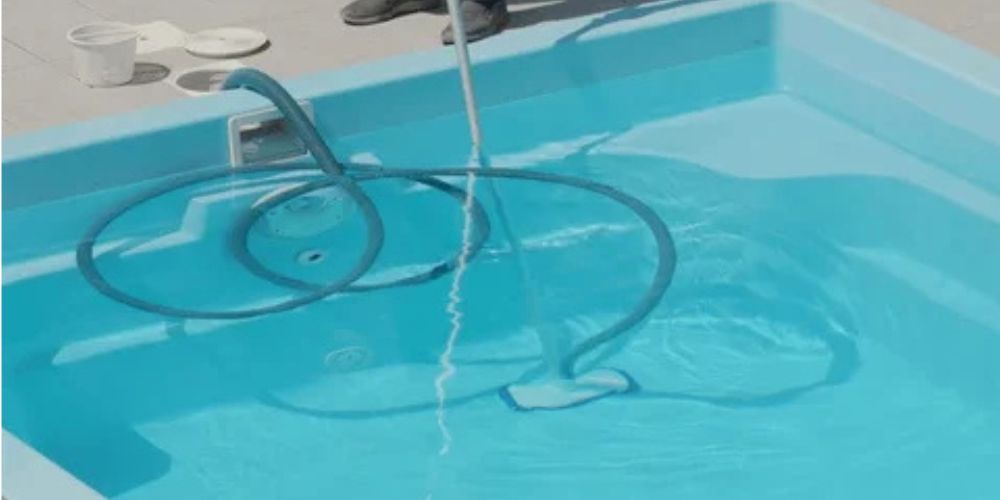
For pools that collect a lot of organic debris, a leaf bagger attachment connected to your vacuum hose lets larger leaves and twigs skip the pump basket entirely. This reduces strain on your filtration system and keeps water flowing more efficiently while you clean.
Step:5 – Apply a Pool Flocculant (If Needed)
When the dirt on the bottom is extremely fine – closer to dust than debris – a flocculant can help. It causes tiny particles to clump together and sink into a pile that’s easy to vacuum out on a “waste” or “drain” setting, rather than trying to filter it out gradually.
Step:6 – Run and Monitor the Filtration System
After manual cleaning, let your filter run for a few hours to catch anything stirred up during the process. Keep an eye on pressure gauges, since a clogged filter will struggle to keep new debris from settling again.
Step:7 – Upgrade with Built-In Cleaning Options (Optional)
Some pools benefit from built-in cleaning systems, like in-floor cleaning heads, which push water and debris toward the main drain automatically. These aren’t necessary for every pool, but they can cut down on manual cleaning frequency over time.
Step:8 – Enhance Debris Capture with Smart Drains
Modern drain designs are built to capture more sediment before it has a chance to settle across the whole pool floor. If you’re dealing with recurring dirt buildup, this is worth looking into as a longer-term fix.
Step:9 – Shock the Pool Occasionally
Shocking your pool periodically helps break down organic material that contributes to grime and cloudy water. It won’t remove dirt directly, but it keeps the water clear enough that you can actually see buildup before it becomes a bigger problem.
Step:10 – Prevent Future Debris Buildup
Trimming back trees near the pool, using a pool cover overnight, and maintaining consistent filtration are simple habits that reduce how often you need to do a deep clean in the first place.
Searching for a Pool Contractor for Cleaning Pool?
If you’re dealing with ongoing debris issues or think it might be time for a pool renovation or filtration upgrade, Cutters Pools is based in Austin, Texas, and happy to help.
Reach out through our contact us to schedule a consultation or ask any questions about pool care and construction.
FAQs
Q.1 - How Often Should You Clean the Bottom of Your Pool?
Most pools benefit from a light cleaning weekly, with a more thorough brushing and vacuuming every two weeks, depending on nearby trees and weather conditions.
Q.2 - What Can I Use Instead of a Pool Vacuum?
A garden hose siphon, a fine mesh net, or manual brushing followed by filtration can all help in a pinch if you don’t have a vacuum on hand.
Q.3 - How Do I Get Fine Dirt Out of My Pool?
Fine dirt often requires a flocculant to clump particles together, followed by vacuuming on a waste setting so the debris doesn’t just recirculate through the filter.
Q.4 - How Do I Remove Sand From the Bottom of a Pool?
Sand is heavier than most debris and tends to stay put, making it a good candidate for a manual vacuum or siphon rather than relying on the filter alone.
Q.5 - Why Does My Pool Always Have Dirt on the Bottom?
Recurring dirt is usually a sign of poor filtration, nearby landscaping debris, or wind exposure. Addressing the source, along with regular brushing, tends to reduce the buildup over time.