Choosing a pool interior finish is one of the most consequential decisions an Austin homeowner will make – and it’s not a decision that generic, one-size-fits-all advice can answer well. Central Texas has its own combination of intense summer UV, hard, limestone-fed water, expansive clay soils, and long swim seasons, and all of that affects how a finish performs here compared to somewhere with a milder climate. Below is a clear, unbiased look at pebble and plaster finishes, with the local factors that matter most when you’re deciding what belongs on the shell of your Austin pool.
Pebble vs Plaster Pool Finish: Which Is Better for Austin?
Both finishes can create a beautiful, functional pool. The right one for you depends on how long you plan to own the home, your tolerance for maintenance, your budget today versus your budget over 15–20 years, and how much Austin’s specific water and climate conditions weigh on your decision.
What Plaster Offers
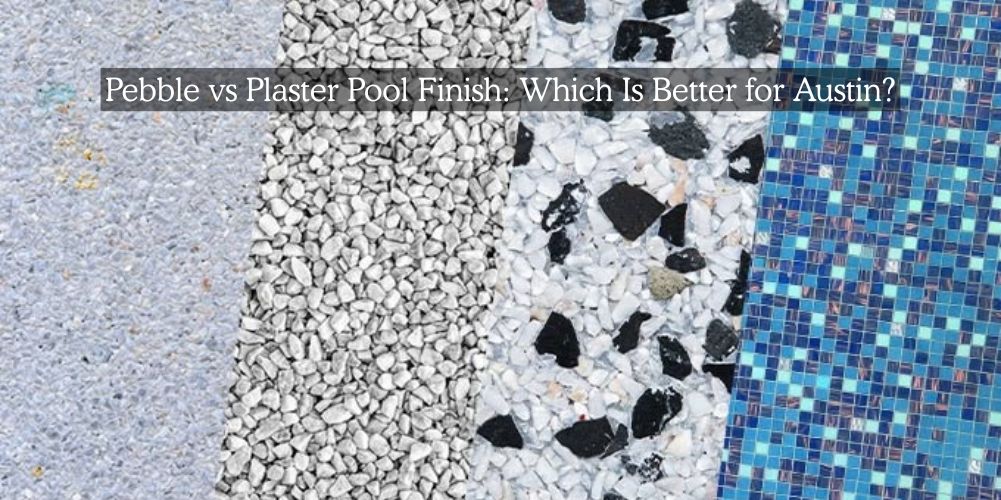
Plaster (sometimes called white marcite) is a mix of Portland cement, white marble dust, and water, hand-troweled over the pool shell. It’s the traditional finish and remains the most affordable option upfront, typically ranging from roughly $4,500 to $8,000 installed for an average residential pool. It gives a smooth, classic look and a bright, light-blue water color that many homeowners associate with a “traditional” pool.
The tradeoff is durability. Plaster is porous, and that porosity is a bigger issue in Austin than in many other markets. Local water drawn from the Colorado River and the Edwards and Trinity Aquifers arrives with calcium hardness often already near or above the upper end of recommended ranges. As pools evaporate in the summer heat, Austin pools can lose a quarter to half an inch of water a day when uncovered. Minerals get left behind and concentrated further with every top-off. That accelerates calcium scaling, nodules, and staining on plaster surfaces. Add in intense UV exposure that bakes the waterline and bond beam, plus rapid thermal cycling from 100°F afternoons into sudden thunderstorms, and plaster in Austin tends to show wear, roughen, and need replastering on the faster end of its typical 7–10-year lifespan.
What Pebble Offers
Pebble finishes (often referred to by brand names such as PebbleTec) embed small, polished natural stones in a cement matrix, with the stones exposed at the surface. This creates a denser, more textured surface than plaster, with a wider range of colours and water tones – from bright tropical blues to deep lagoon tones.
Pebble’s density is a genuine advantage in Austin’s conditions. It resists the etching that hard water and chemical adjustments cause, holds up better against UV and thermal cycling, and generally lasts 15–20+ years – roughly double the lifespan of plaster. It’s also more forgiving if your water chemistry drifts, which matters given how much local homeowners have to actively manage calcium and pH here. The tradeoff is upfront cost, generally $9,000–$14,000+ installed, and a slightly textured surface underfoot, which some swimmers notice more than others (finer pebble finishes reduce this considerably).
Comparison Table: Pebble vs Plaster for Austin Pools
Factor | Plaster | Pebble |
Average lifespan | 7–10 years (often shorter in Austin’s hard water) | 15–20+ years |
Upfront cost (installed) | Lower, roughly $4,500–$8,000 | Higher, roughly $9,000–$14,000+ |
Resistance to Austin’s hard water/calcium scaling | Lower – porous surface absorbs minerals | Higher – dense surface resists mineral etching |
UV and thermal cycling durability | More prone to bleaching, brittleness, hairline cracks | Handles heat and rapid cooling with less surface stress |
Maintenance | More frequent acid washing, chemistry needs to stay tightly balanced | Lower maintenance, more forgiving of chemistry swings |
Texture underfoot | Smooth | Lightly textured (finer pebble blends feel smoother) |
Water colour options | Classic light blue | Wide range, deeper and more varied tones |
Long-term cost of ownership | Higher over 20 years due to repeated replastering | Often lower over 20 years despite higher initial cost |
Which Finish Makes Sense for Your Austin Pool?
If you’re planning to sell within the next few years, plaster’s lower upfront cost can still make sense – it delivers a clean, attractive finish without the bigger initial investment. If this is a forever-home pool, or if you’re tired of managing Austin’s hard water chemistry and don’t want to think about replastering again in a decade, pebble’s durability against local conditions generally pays for itself over time. Neither finish is a bad choice; it’s really a question of how the Austin-specific factors above line up with your priorities and timeline.
Searching for a Pool Builder Near Austin?
If you’re weighing pebble against plaster and want an honest, locally informed recommendation, the details matter more than the marketing. An experienced Austin pool builder should be able to walk you through how your specific soil conditions, sun exposure, and water source affect the real-world performance of each finish, not just industry averages. Cutters Pools works with homeowners throughout the Austin area and can help you evaluate your options based on your pool’s actual conditions – so whichever finish you choose, it’s the right one for your home, your budget, and how long you plan to enjoy your backyard.